The State of CX in 2026
From agentic commerce to new regulations around AI use and governance, a new set of forces is reshaping brand visibility, customer relationships, loyalty, customer journeys, and service. They have fundamentally shifted the balance of power between consumers and brands, and they’re placing new responsibility on CX leaders to ensure their organizations are agile enough to seize on new opportunities while being resilient enough to survive change.
Download our report to learn the results of CX Network’s research into the top CX trends, challenges, spending plans, and customer behaviors driving CX in 2026. Hear from thought leaders on what you should be doing now to ensure your organization is on track to become a strategic growth engine.

Discover how CX practitioners are adapting, investing, and strategizing to drive CX
Shaped by new technologies, new customer behaviors, and age-old challenges, CX has changed drastically since the start of this decade. However, the last 12 months have seen external forces – from Big Tech to regional regulators – start to reshape what CX means and what it is capable of, accelerating change and forcing new ways of working.
These changes have led practitioners to ask several key questions around how they can reach and engage customers and what recent developments will mean for CX moving forward. CX Horizons: The state of CX in 2026 is based on our annual survey, completed by 342 CX practitioners, service leaders, experience designers, analysts, and consultants, between December 2025 and January 2026.
The resulting report uses their insights to examine what agentic commerce means for practitioners and the key actions they must take to remain relevant; why consumers are meeting their own needs when it comes to quick and seamless CX; and how personal AI assistants and Moltbook could be undermining hard-won customer trust.
Sponsored by
What CX Leaders are Saying:
60%
say growing their customer base is a top strategic CX aim for 2026
39%
expect their 2026 CX budget to be higher than last year
36%
say generative and agentic AI will bring a need for their teams to upskill
40%
expect spending on agentic AI and AI agents to increase this year
55%
have an organization-wide or department-wide approach to CX best practice
Strategic Aims and Top Challenges for CX in 2026

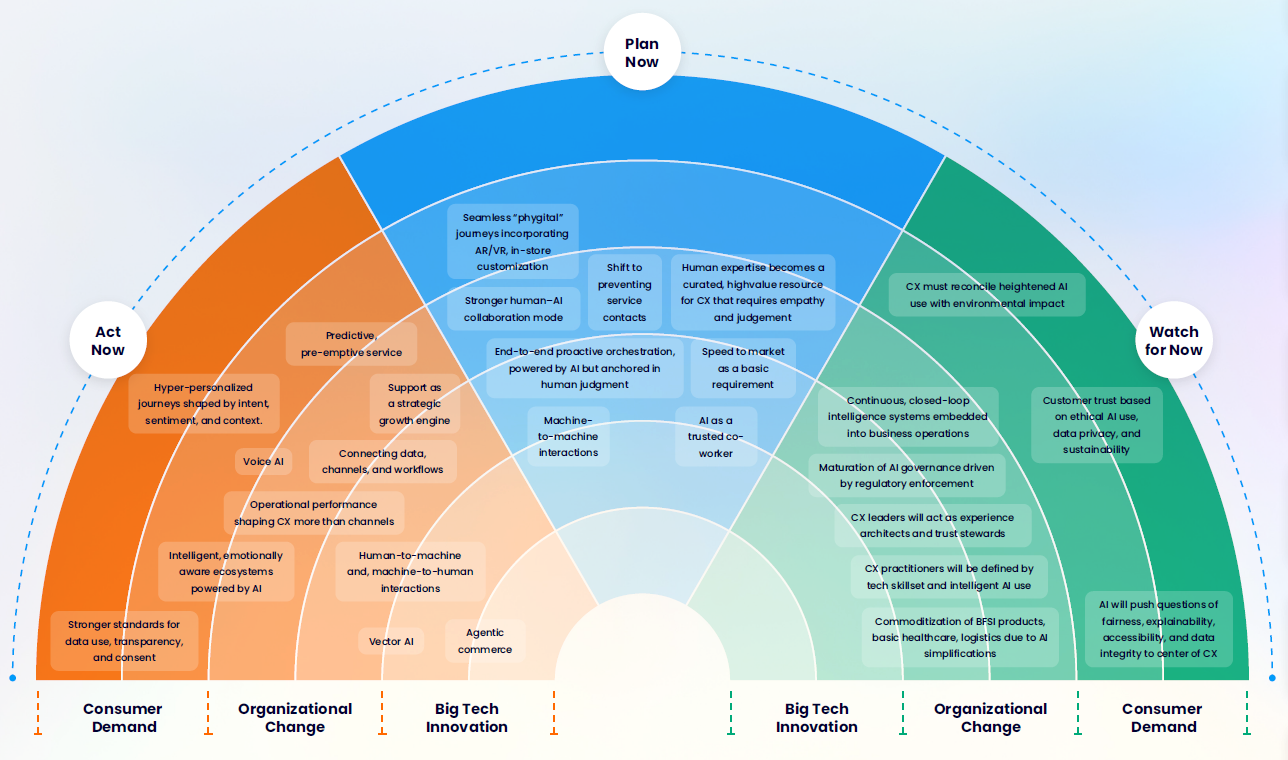
The Trends Shaping CX to 2030
- CX has new foundations
- The five pillars of AI implementation
- The new rules of discoverability
- What these trends say about CX in 2026

Investing in CX in 2026
- Spending on AI set to rise
- Working with third party solution providers
- The top 5 investment obstacles
- Demonstrating ROI is a barrier to investment

The Age of High-Tech CX
- Digital CX needs intelligence, empathy, and effortless design
- AI demands new skills and processes
- Generative AI can multiply efficiencies but should be used with caution
- The outlook for generative and agentic AI in CX

Understanding the Customer of 2026
- Customers satisfy own need for speed and convenience
- The trifecta of modern loyalty
- What’s influencing customers?
- Connecting with the customer of 2026
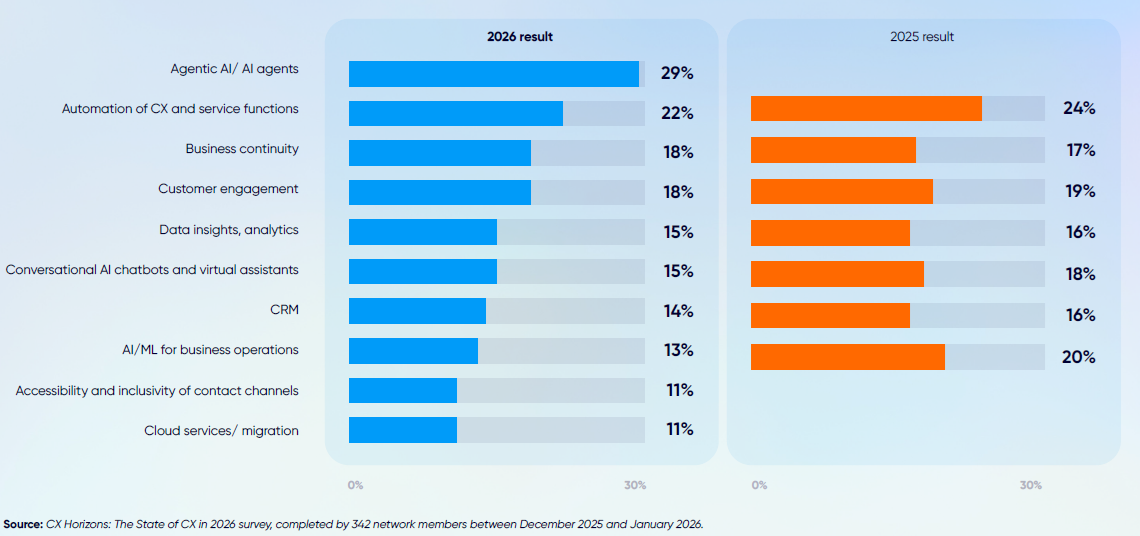
How CX Leaders are Planning to Invest in 2026
what cx leaders need to know
The Pillars of AI Implementation

Strategic clarity
Define the specific business problem or customer need driving implementation, identify clear use cases with
measurable outcomes, and ensure AI serves your CX strategy – not the other way around

Organizational readiness
Identify upskilling needs and expertise gaps. Ensure infrastructure and governance frameworks exist. Critically,
involve employees from the beginning – AI implementations that exclude frontline input or ignore adoption
concerns fail regardless of technical excellence. Build change management into deployment from day one

Data Foundation
Assess the current state of your data: Is your data clean, structured, and accessible? How will it interact with learning models? Build processes to ensure diversity and prevent bias in training data, and establish quality assurance mechanisms

Customer trust and transparency
Communicate AI use clearly and proactively to build trust before you deploy. Define ethical boundaries – is personalization helpful or invasive? Establish when automation hands off to human intervention. Use behavioral
prediction to serve customers, not manipulate them. Balance compliance requirements with innovation
What’s on the horizon for CX?