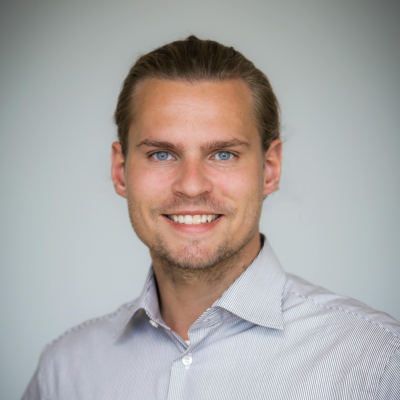
Rasmus Birkelund Høegh

Rasmus Birkelund Høegh

Senior Engineer Vattenfall Vindkraft AS

Rasmus Birkelund Høegh

Rasmus Høegh is a Senior Engineer at Vattenfall Offshore Wind with eight years of experience in offshore structural engineering, specialising in structural integrity and digital asset management for offshore wind support structures. He is responsible for the sensor-to-screen infrastructure behind Vattenfall's Support Structure Integrity (SSI) framework, bringing structural monitoring, operational data, environmental conditions and engineering models together in a digital twin environment. His work focuses on automated, scalable pipelines and interactive software that turn billions of daily measurements into continuous integrity assessment, fast engineering analysis and decision-ready insights, supporting data-driven actions throughout the asset lifecycle.

Focus Day, Exploring Geotechnics | Monday, 24th August 2026

13:10 Panel and Peers - Digitalizing Offshore Installation – Moving from manual planning and driving a Cultural Shift

Offshore installation remains one of the most complex phases in wind farm development, yet digitalization is lagging. While technology exists, the challenge is cultural too: shifting from a project-by-project mindset to a collaborative approach that embraces data sharing, standardization, and continuous improvement. Planning frequently relies on fragmented or manual tools, monitoring capabilities remain limited, and knowledge transfer between projects is insufficient.
How can the industry overcome resistance to change and adopt workflows that improve efficiency, safety, and transparency? This panel will explore technical gaps, cultural barriers, and practical steps toward true digitalization in offshore installation.
• Why do spreadsheets still dominate offshore installation planning? What technical and cultural obstacles prevent adoption of integrated digital solutions?
• How can real-time process monitoring, AI and data-driven decision-making improve safety, efficiency, and cost control?
• How do we overcome the “project mindset” and ensure knowledge retention?
What role does cultural change play in enabling standardization and back loop communication?

Offshore Foundations, Conference Day 1 | Tuesday, 25th August 2026

17:00 Deep Dive B: From Model-Based Reassessment to Governed, Data-Driven Lifetime Extension

• Moving from one-off engineering reassessments to an operational, data-driven lifetime extension strategy
• Building a governed sensor-to-screen Digital Twin: from monitoring systems and data quality assurance to decision-ready LTE products
• Virtual sensing, using tower accelerations to reconstruct structural response and fatigue hotspots across entire wind farms
• Practical, real-world examples, including ship impact, scour development, and operational curtailment
• Data-driven decision-making in daily operations and lifetime extension assessments
• Open discussion on data availability, transparency, data sharing, and pathways toward future research, codes, and standards

This deep dive presents Vattenfall’s transition from traditional, model-based lifetime reassessment toward a governed, fully data-driven approach to lifetime extension in offshore wind. Rather than treating monitoring and analysis as isolated exercises, the session demonstrates how a complete sensor-to-screen Digital Twin can be made operational at scale — linking monitoring systems, data quality control, structural modelling, virtual sensing, and LTE products into a single, transparent workflow.
Through concrete case examples from operating wind farms, participants will see how measured data is transformed into structural loads, fatigue damage, and integrity indicators that directly support data-driven operational and lifetime extension decisions. Particular, emphasis is placed on governance: how traceability, validation strategies, and clearly defined outputs are essential for trust, repeatability, and regulatory acceptance.
The session also opens a broader discussion on data sharing and collaboration. By making high-quality operational data available for research and joint initiatives, the industry can accelerate learning, improve methods, and support the development of future guidelines, codes, and standards. The format combines short technical walkthroughs with interactive discussion, inviting participants to reflect on their own data readiness, organizational challenges, and opportunities to move from promising concepts to practical, standardizable solutions.

Check out the incredible speaker line-up to see who will be joining Rasmus.

Download The Latest Agenda