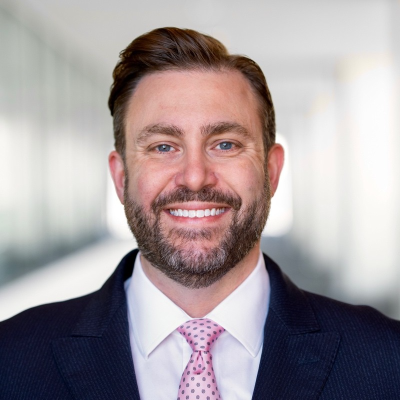
Peter-Anthony Pappas is a patent professional licensed to practice before the U.S. Patent and Trademark Office (USPTO). He serves as the Director of Intellectual Property (IP) Policy for the U.S. Senate Committee on the Judiciary under Senator Thom Tillis – Chairman of the Subcommittee on IP – to whom he advises on all IP matters (e.g., patent, copyright, trademark, trade secret).
Peter-Anthony also advises Senator Tillis on tech policy (e.g., artificial intelligence, blockchain, etc.), antitrust, and Judiciary Committee nominations, including Supreme Court confirmation hearings. Peter-Anthony previously served as a Professional Staff Member Detailee for the U.S. Senate Committee on the Judiciary under Senator Tillis – then Ranking Member of the Subcommittee on IP.
Prior to his roles in the U.S. Senate, Peter-Anthony served as the Special Advisor Detailee to Under Secretary of Commerce for IP and Director of the USPTO Andrei Iancu, advising the Under Secretary on IP, artificial intelligence (AI), and operational agency matters. Most notably, Peter-Anthony helped develop the 2019 “Revised Patent Subject Matter Eligibility Guidance” (PEG), a framework for how the agency could leverage AI for assisting in search during examination, and the first agency working group tasked with considering the interplay between AI and IP. He has also served in various other USPTO roles, including Patent Trial and Appeal Board Branch Chief, Supervisory Patent Examiner, and Primary Patent Examiner.
While at the USPTO Peter-Anthony served on the White House Office of Science and Technology Policy Networking and Information Technology Research and Development (NITRD) Subcommittee AI Research and Development Interagency Working Group and he served on the Department of Commerce Interagency Committee on Standards Policy (ICSP) AI Standards Coordination Working Group.
Peter-Anthony has co-authored two papers with the USPTO’s Office of the Chief Economist – “Closing the Gender Gap in Patenting: Evidence from a Randomized Control Trial at the USPTO,” which was published in the American Economic Journal: Economic Policy, and “Patents and the Independent Inventor Lifecycle.” These papers are based on USPTO’s first randomized control trial (RCT), which Peter-Anthony created. This RCT also served as the foundation for the creation of the agency’s Pro Se Pilot Program, which provided affirmative patent assistance to independent inventors and small businesses.
Peter-Anthony has served on numerous IP and non-IP related boards and committees. He served on the Supervisory Patent Examiners and Classifiers Organization (SPECO) Board of Directors for over a decade and for nearly five of those years served as Chairman of its Board of Directors. SPECO is a nonprofit organization that promotes the progress of its members and of the U.S. patent system. Established over 50 years ago and officially recognized by the USPTO, SPECO is composed of over 400 USPTO managers and professionals.
Peter-Anthony has also spoken at numerous domestic and international events regarding U.S. IP policy, law, and related legislation, and he has guest lectured at Harvard Law School, the University of New Hampshire Franklin Pierce School of Law, and the George Washington University Law School.
Peter-Anthony received a Bachelor of Science in Computer Engineering from the Georgia Institute of Technology and received an Executive Certificate in Public Leadership from the Harvard Kennedy School. He is the third generation of his family to pursue public service.
Check out the incredible speaker line-up to see who will be joining Peter-Anthony.
Download The Latest AgendaIn Partnership With:

QUESTIONS?
Address: IQPC Ltd, 129 Wilton Road,
London SW1V 1JZ
Telephone: +44 (0) 207 368 9484
Fax: 44 (0) 207 368 9301
Email: exchangeinfo@iqpc.com

©2026 IQPC. All rights reserved.