The Inevitability of AI Adoption in Legal & Compliance

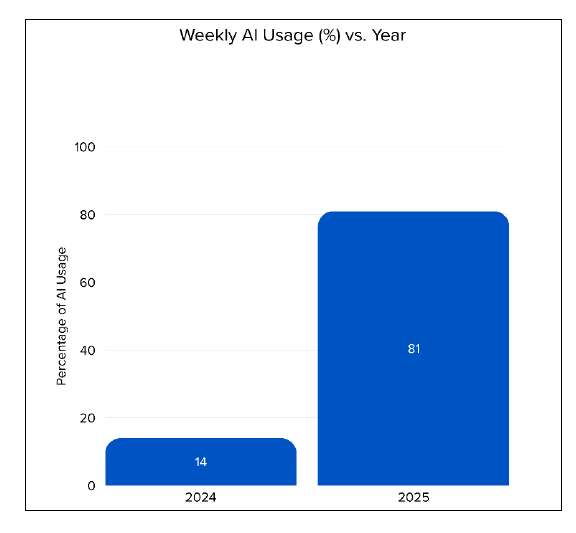
The prevailing sentiment is that AI adoption is non-negotiable. Speakers repeatedly emphasized that the technology is already embedded in the business ecosystem, making prohibition both impractical and counterproductive. The discussion framed AI not as an optional tool but as a foundational technology, akin to the internet or email in previous decades. Alexander Arato, articulated this reality, stating that outright prohibition is an obsolete strategy. “The reality is that you can't not use AI anymore. It's just a question of how you're going to use it... All of your vendors are using it. So it's a reality.” — Alexander Arato Senior Vice President, Deputy General Counsel, Global Head of Privacy & Cyber Security at Endeavor and TKO Group Holdings This sense of inevitability was reinforced by data shared during the sessions. Cecilia Ziniti, CEO of GC AI, presented compelling statistics illustrating the rapid acceleration of AI adoption within legal departments over the past year. Cecilia Ziniti, stated that a year ago the AI weekly usage was 14% compared to 81% today.
The strategic implication is that leadership must now focus on creating frameworks for responsible use rather than attempting to restrict access.
The conversation has matured from theoretical possibilities to a showcase of tangible, high-value applications that are already delivering significant efficiencies and business impact. Panelists shared numerous examples of how AI is being deployed to automate routine tasks, generate sophisticated analysis, and drive strategic outcomes.
Operational Efficiency and Cost Savings: Paolo Berard, Chief Compliance Officer at NRG Energy, shared a powerful use case where an AI weather prediction model outperformed a human team, directly impacting the company's high-stakes energy trading business.
Automating Legal Workflows: Cecilia Ziniti provided a live demonstration of AI's power to streamline core legal work, showing how it could analyze an NDA, summarize a deposition, and draft a Data Protection Impact Assessment (DPIA) in minutes—tasks that would traditionally take hours. Shelly Shaw, General Counsel at Analog Devices, also highlighted the use of an internal chatbot fed with company policies to handle recurring employee questions, freeing up lawyers for more strategic work.
Enhancing Complex Analysis: In the pharmaceutical sector, Isabel Duffy described how AI is used to generate millions of molecule ideas for drug discovery and to accelerate the creation of complex FDA filings, turning a months-long process into a matter of minutes for a first draft.
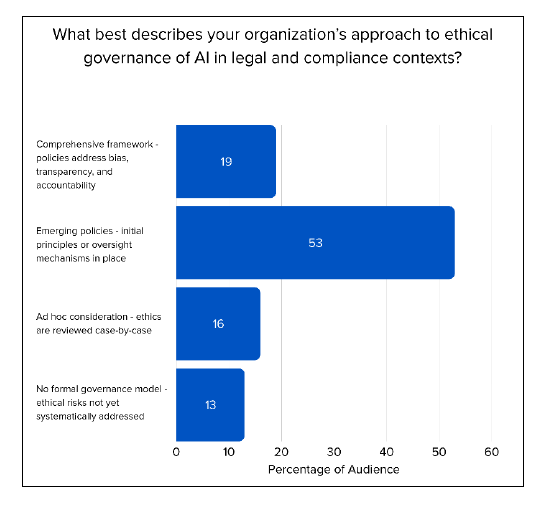
With adoption now a given, the focus has pivoted to establishing robust governance frameworks. The discussions revealed a consensus on several key principles for ethical and effective AI implementation.
Cross-Functional Governance is Essential: Speakers like Paolo Berard and Isabel Duffy stressed the necessity of a multi-disciplinary approach. Effective governance requires collaboration between legal, compliance, IT, cybersecurity, and the business units using the technology. This ensures that risks are viewed from all angles and that policies are practical and well-aligned.
Adopt Established Frameworks: The NIST AI Risk Management Framework was repeatedly cited as a valuable starting point for building internal policies. As Paolo Berard recommended, "if nothing else, it gives you a really good foundation and a place to start."
Maintain Human Oversight: A critical and recurring point was the need for a "human in the loop." Speakers cautioned against blindly trusting AI outputs. Alexander Arato provided a crucial framing of the technology's limitations:
“[The] biggest misconception is that people think [AI] knows something, and it knows nothing. It's not designed to know anything. The best description I read [was]: ... an AI tool is just a plausibility predictor. It's all it is, it's just guessing at the answer.” — Alexander Arato Senior Vice President, Deputy General Counsel, Global Head of Privacy & Cyber Security at Endeavor and TKO Group Holdings
This was echoed by Noreen Fierro, Chief Ethics & Compliance Officer at Principal Financial Group, who shared an instance where an AI summary of a 900-page regulation completely missed key provisions, proving that human expertise remains indispensable for verification.
“In my space… that means preparation, means having the right compliance program in place, governance policies, procedures, training, and being prepared to shift and adapt based upon that change, and I think if we're not prepared to adapt, then we will not succeed in our roles.” — Corey Dennis Associate General Counsel & Chief Privacy Officer at Legend Biotech
The overall sentiment regarding AI has evolved significantly. Initial caution and apprehension have given way to a sense of pragmatic urgency and, in many cases, genuine enthusiasm. While speakers remain clear-eyed about the risks, including data privacy, copyright, and the potential for "hallucinations," the dominant narrative is one of opportunity. The fear of being left behind has overtaken the fear of the technology itself.