Conference Day 1

8:15 am - 9:00 am WELCOME & REGISTRATION

9:00 am - 9:15 am OPENING REMARKS

9:15 am - 9:30 am ICEBRAKER: INTERACTIVE POLLING

We kick off the Game Production Summit with a fast-paced, interactive, polling activity that invites attendees to benchmark themselves against peers. This icebreaker will reveal common priorities, highlight expertise in the room and help shape conversations on topics that matter most. 

9:30 am - 10:15 am OPENING PANEL DISCUSSION: Time, Scope, Quality: Is This Triangle Broken?

Darryn Dauth - Production Director, EA
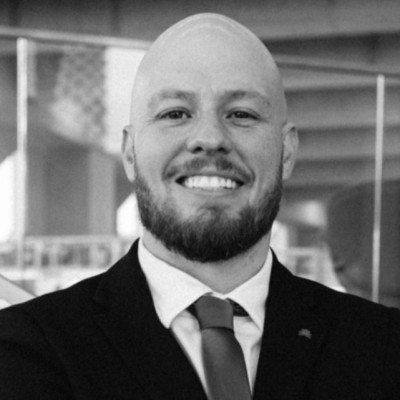
Our opening panel discussion tackles the question every production leader has faced: Can we still deliver a quality product, on time, and on budget?

For decades, producers relied on the iron triangle (time, scope, and quality) as the gold standard for project decision-making. The rule was simple: pick two, accept the consequences of the third. The model was clean, predictable, and it worked.
Today, however, legacy production models are struggling at scale. Production leaders are no longer just balancing three points; they are managing a widening gap between scope and capacity. Teams are navigating evolving toolchains mid-cycle, distributed workforces, and complex platform compliance that didn’t exist five years ago. Often, when scope is fixed but capacity is fluid, leaders find themselves compromising all three corners of the triangle.
This panel explores reframing the iron triangle as a priority triangle, shifting the focus from managing tasks to balancing scope versus capacity. Our panellists will discuss how this priority-driven approach helps head of production to:
  • Audit Real-Time Capacity: Discuss how to measure the actual velocity of distributed teams and outsourcing partners versus the "ideal" roadmap.
  • Structure Resilient Roadmaps: Explore moving away from rigid feature sets toward flexible milestones that account for technical risk.
  • Phase Investment: Deciding how to fund teams based on capacity thresholds rather than arbitrary deadlines.
  • Build Sustainable Studios: Creating teams that can ship repeatedly without burning out their capacity on a single "one-game wonder." 
img

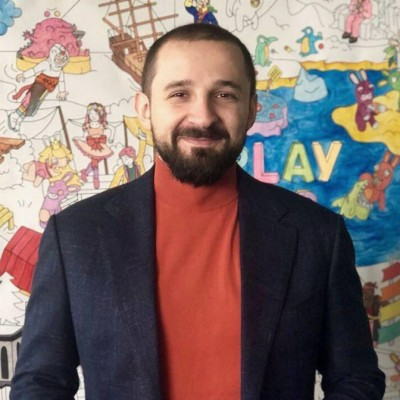
Darryn Dauth

Production Director
EA

10:15 am - 10:45 am CASE STUDY: Optimising Build Pipelines for Faster, Stable Releases

As AAA games grow in complexity, build pipelines can become a major production risk. Every milestone, from QA cycles to feature iterations, depends on fast, stable, and predictable builds, yet poorly managed pipelines often slow progress. Builds can take hours, asset imports may fail, and platform releases can break unexpectedly. These inefficiencies threaten schedules and put high-profile milestones at risk.

In this session XXXX presents pipeline optimisation as a production strategy, drawing on tested experience to show how to reduce build times, improve stability, and align pipelines with production goals.
Join this session as we explore how to develop:
  • Faster Builds through the implementation of parallelisation to run tasks across multiple cores. Explore how to effectively utilise distributed build agents to scale workloads across the team.
  • Stable Builds by integrating automated testing at all levels and reduce platform-specific failures by standardising build environments.
  • Reliable Delivery through the adoption of CI/CD practices to automatically build on every code merge, catch errors early, and maintain predictable delivery pipelines. 

10:45 am - 11:15 am INTERACTIVE CASE STUDY AND OPEN DISCUSSION: Restarting a Franchise: Product, People and Process in the Age of New Technology

Natalia Agafonova - Executive Producer, Bohemia Interactive

Question: How do you reboot a beloved franchise on entirely new technology when most of the team is new, legacy processes no longer scale, and expectations from players and shareholders are higher than ever?


In this session, Natalia Agafonova, Executive Producer at Bohemia Interactive, uses Arma Reforger as a case study to explore one of the most complex challenges in modern game development: rebuilding a franchise while simultaneously reinventing the way you make games.
At Bohemia, the journey began with a clear product vision which establishing the core identity of Arma as an authentic, multiplayer military sandbox. Translating that vision to a new generation of developers required fast-failing prototypes, iterative sprints, and ongoing alignment. Along the way, the team encountered challenges including engine limitations that required rework and new developers interpreting franchise concepts differently,
Following this case study example, the session becomes an interactive discussion, where delegates will form small groups to share experiences on how product, people, and process challenges shape franchise restarts in their own studios. 

img

Natalia Agafonova

Executive Producer
Bohemia Interactive

11:15 am - 11:45 am NETWORKING REFRESHMENTS

11:45 am - 12:15 pm SUCCESS STORY: From Two Years to Five Months - How Pixel Federation Reduced Timelines and Scaled Production Through Spin-Offs

Marek Jusko - Game Producer, Pixel Federation s.r.o.

In the post-COVID gaming world, launching high-quality products has become increasingly costly. Pixel Federation faced this challenge head-on by radically rethinking their development strategy. By creating spin-offs of existing games, they reduced development timelines from two years to just five months, while maintaining quality and user experience. This allowed the studio to save costs, optimise resources, and plan for sustainable long-term production cycles.
Led by Game Producer Marek Jusko, this session offers a rare, behind-the-scenes look at the the benefits, challenges, and strategic decisions involved in rapidly creating spin-offs, and provides insights for studios aiming to balance speed, quality, and sustainability.
Key discussion points:
  • Strategic Road mapping: Discuss approaches for planning and prioritising spin-off projects to maximise impact. Explore how to allocate resources effectively and ensure alignment with long-term studio goals.
  • Efficiency Gains: Discover the benefits of leveraging a shared code base to dramatically reduce development time while maintaining game quality.
  • Challenges & Best Practices: Explore the importance of maintaining code integrity, customising project-specific features, and avoiding audience fatigue. 
img

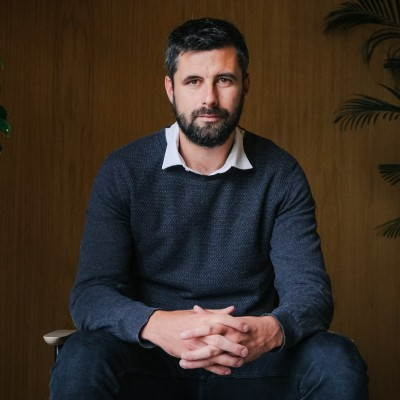
Marek Jusko

Game Producer
Pixel Federation s.r.o.

12:15 pm - 12:45 pm KEYNOTE: Using Player Data to Guide Production Priorities

In today’s gaming world, production decisions can no longer rely solely on intuition. Player data from telemetry, analytics, and live metrics is a vital tool for shaping what to build, fix, or improve.

This session explores how production teams can leverage player insights to make data-driven decisions, accelerate iteration, and deliver experiences that maximise engagement.
Key topics explored:
  • Translating player data into production decisions
  • Balancing roadmaps with player data
  • Aligning cross functional teams with player insights 
12:45 pm - 1:45 pm NETWORKING LUNCH

1:45 pm - 3:15 pm INTERACTIVE DISCUSSION GROUPS

1:45 pm - 3:15 pm TABLE A : Team Evolution, Not Revolution: Shipping Success After Difficult People Decisions
Stephane Jankowski - Executive Producer, Ubisoft

As an Executive Producer overseeing multiple projects across different studios, Stéphane Jankowski works at the intersection of franchise strategy, resource alignment, and long-term risk management. In this open, peer-level roundtable, Stéphane will share candid insights into the high-stakes people decisions that can make or break a project.

Drawing on real experiences from a long-established, high-performing studio, the discussion will explore how senior production leaders can evolve teams without destabilising them, make tough calls while preserving morale and keep delivery on track. The session focuses on the human side of leadership and how, when handled well, difficult decisions can still lead to the ultimate win condition: shipping a successful game. 

img

Stephane Jankowski

Executive Producer
Ubisoft

1:45 pm - 3:15 pm TABLE B: Capacity Is Strategy: Making Portfolio-Level Trade-Offs at Scale
Agnes Pinter - Senior Director Production, Product Madness

In studios running multiple products and live services, capacity decisions are no longer operational, they are strategic. What production leaders choose to fund, delay, or stop quietly shapes product quality, team health, and long-term velocity.
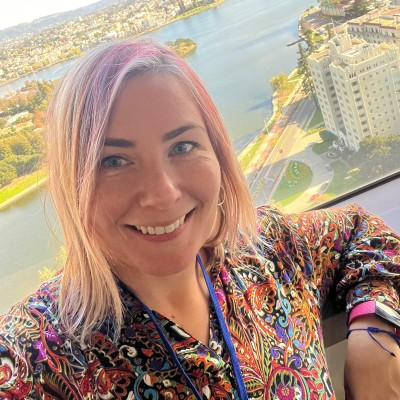

Led by Agnes Pinter, Senior Director of Production at Product Madness, this peer-level roundtable explores how senior production leaders plan, protect, and reallocate capacity across portfolios. The discussion will focus on decision-making under pressure, stop decisions, and how leaders balance short-term delivery with long-term sustainability when everything feels urgent. 

img

Agnes Pinter

Senior Director Production
Product Madness

1:45 pm - 3:15 pm TABLE C: From “Us and Them” to One Team: What Makes Outsourcing Work
Virginia Kirova - Outsourcing Producer, Avalanche Studios

Outsourcing is no longer a contingency plan, it’s a core part of how modern games are built. Yet many studios still struggle with an “us and them” mindset that limits the true value of external partners. This roundtable will explore what it really takes to move beyond transactional outsourcing and build embedded vendor relationships.

Led by Virginia Kirova, Outsourcing Producer, Avalanche Studios Group, we will discuss the practical differences between embedded and task-based outsourcing, when and how to remove the “external” boundary, and why production alone cannot solve integration challenges without broader cultural buy-in from leads and teams. The session will also address a topic many studios quietly carry with them: the lingering “ghosts of the past” from failed outsourcing relationships, and how those experiences shape resistance, fear, and mistrust today. 

img

Virginia Kirova

Outsourcing Producer
Avalanche Studios

1:45 pm - 3:15 pm TABLE D: Building Teams for the Future: Intern Pipelines, Senior Talent, and the Generalist vs Specialist Debate
Steven Bigras - Executive Producer, Avalanche Studios Group

This roundtable explores how studios should design team structures for the next generation of game development. We will examine the long-term impact of intern pipelines versus senior-heavy teams, the shifting balance between generalists and specialists, and how team composition affects risk, innovation, production speed, leadership readiness, and studio sustainability.


The session focuses on future-proofing studios in an industry facing rising costs, shrinking risk tolerance, and rapidly evolving production models. 

img

Steven Bigras

Executive Producer
Avalanche Studios Group

1:45 pm - 3:15 pm TABLE E: Building and Scaling Teams Across a Global Studio Network

Join this interactive roundtable session led by Dan Hernberg, VP, Executive Producer at CD PROJEKT RED, to explore strategies to building, scaling, and sustaining high-performing teams across a global, multi-studio network. The discussion will focus on how to maintain creative cohesion and production alignment across distributed teams, while building strong studio cultures that transcend time zones.

The discussion will also dive into best practices for onboarding and integrating new hires across global locations, developing scalable mentorship and career growth models for mid-level and junior talent in a senior-heavy industry.

1:45 pm - 3:15 pm TABLE F: How Are Studios Incentivising Teams Beyond Salary… and is it Working?
Przemyslaw Kosiorek - Production Director, Tripledot Studios

Recently named “The Fastest Growing Company in Europe” by the Financial Times, Tripledot is one of the world’s leading mobile gaming companies. Join this interactive roundtable led by Przemyslaw Kosiorek, Production Director at Tripledot, for a strategic discussion on how studios are rethinking incentives beyond traditional salary models.

The session will explore innovative approaches to motivating production teams, including profit-sharing models, alternative bonus structures, contribution-based rewards and whether these approaches genuinely deliver better outcomes for teams and studios alike.
Przemyslaw currently oversees delivery across four live production teams, while also managing business analytics and customer support functions. With a background spanning development, product, and production leadership, he is passionate about creating systems where teams truly receive the value they put into a product

img

Przemyslaw Kosiorek

Production Director
Tripledot Studios

3:15 pm - 3:45 pm NETWORKING REFRESHMENTS

3:45 pm - 4:15 pm CASE STUDY: Building Production Teams for Transformation: Gameloft’s Journey from Waterfall to Product-Driven Delivery

Viktor Stankov - Production Director, Gameloft

Game development studios crave agility but focus far less on what it actually takes to transform production at scale. In this session, Viktor Stankov, Production Director, Gameloft shares the multi-year production transformation which moved Gameloft away from traditional, role-siloed workflows toward cross-functional and product-focused feature teams inspired by Agile and Scrum principles.

Rather than applying “Agile by the book,” Gameloft took a fail-fast approach by experimenting, breaking assumptions and learning from what didn’t work. This transformation reshaped not just workflows, but the production organisation itself, including how producers were hired, how teams were structured and how decisions were made.
The session explores how Gameloft’s production leaders balanced delivery pressure with mindset shifts, while building a production team capable of leading transformation rather than resisting it.
Key discussion points include:
  • Why Gameloft chose to transform: The limitations of previous production models, and why delivering content isn’t the same as delivering value to players.
  • From waterfall to game-ready agility: How Scrum and Agile principles were adapted for game development
  • Rebuilding production teams: How large teams were restructured into smaller, cross-functional feature teams with true ownership and hiring producers for a transforming studio 
img

Viktor Stankov

Production Director
Gameloft

4:15 pm - 5:00 pm PANEL DISCUSSION: Ship or Slip: Turning Production Processes into a Business Strategy to Crush Bottlenecks

Modern game production must evolve from task coordination into a true business strategy to avoid cross-discipline bottlenecks, ensuring games are delivered on time and on budget. As teams scale, production heads are increasingly required to manage technologists and creatives who work, communicate, and prioritise very differently.

Join this discussion as we focus on how production can fluently translate goals, constraints, and priorities across departments, aligning teams that speak very different professional languages. Panellists will examine how to manage engineering, creative, and support functions without forcing a one-size-fits-all approach, while still driving shared outcomes and accountability through dotted-line management structures.
Rather than focusing solely on shipping a single title, this session emphasises repeatable processes, sustainable workflows, and production as a business function within mass game development. Attendees will gain insight into how to run technology-driven production with business discipline, without stifling creativity and how to build communication and management practices that prevent bottlenecks.
Key discussion themes include:
  • Managing cross-discipline teams as a business strategy
  • Avoiding bottlenecks through process, not micromanagement
  • Driving alignment and accountability across dotted-line structures 

5:00 pm - 6:30 pm CLOSING REMARKS AND NETWORKING DRINKS RECEPTION

6:30 pm - 6:30 pm END OF CONFERENCE DAY ONE