CONFERENCE DAY TWO - Thursday 22nd October

Early Morning Sessions

8:00 am - 8:45 am Registration & Coffee

9:15 am - 9:30 am Opening Chair Notes

Session Available For Sponsorship

9:30 am - 10:00 am Morning Keynote Presentation: Leading with Clarity: Using Team Structure and Data to Predict and Power Tool Adoption

Ionel Condor - Director of Engineering, RWS

When engineering teams grow and diversify, choosing the right tools becomes a leadership challenge, not just a technical one. In this session, Ionel Condor shares how his approach and deep expertise to team structure, long term stability and people first management helps him anticipate which tools will resonate with developers. Drawing on his experience overseeing teams of more than twenty people, unifying different security approaches and relying on real world data from surveys and AI tool usage, Ionel shows how smart leadership accelerates adoption and cuts through noise.
• Spotting the tools developers actually want through survey insights, productivity signals and usage patterns across the organisation
• Designing team structures that reveal friction points early and make it easier to understand what engineers need to thrive
• Winning developer buy in by presenting clear, evidence driven cases rather than relying on directives or assumptions

img

Ionel Condor

Director of Engineering
RWS

10:00 am - 10:30 am Morning Keynote Presentation: Organising Teams That Enable Platform Democratisation at Scale

Carlos Costa - Global Director of Data & AI Foundations, Adidas

As platforms grow across data, cloud and AI foundations, democratising access depends on how teams are organised as much as the technology they build. In this session, Carlos Costa shares his insights on how organizations can structure their engineering teams to spread capability, reduce dependency on central bottlenecks and ensure every developer can adopt the platform confidently, even as complexity and security demands increase.
• Structuring platform, data and AI teams so responsibilities are clear, contributions are shared and internal users always have a path to support without central slow downs
• Enabling developers through leadership practices that align team goals, clarify ownership boundaries and create predictable routes for onboarding, training and collaboration
• Democratising platform adoption by shaping team interactions, feedback loops and workflow design so open source frameworks and shared pipelines are easy for any engineer to consume and contribute

img

Carlos Costa

Global Director of Data & AI Foundations
Adidas

Morning Coffee Break

10:30 am - 11:00 am Morning Coffee Break

Late Morning Sessions

Stream A: Platform Engineering & Developer Experience

11:00 am - 11:30 am Case Study Presentation: Will AI Really Replace Developers...or Create a New Kind of Developer?
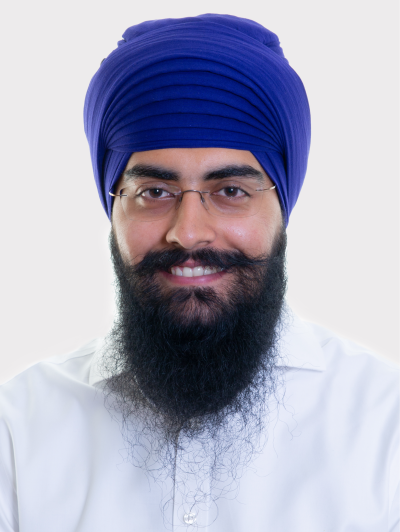
Karanvir Attwal - Solutions Architect, GitLab
AI can already generate code, explain systems and automate parts of software delivery, but useful output depends on the context and constraints developers provide. This 30-minute session asks whether AI will really replace developers, then examines the more practical answer: it will redefine their role. Through examples of repository instructions, AGENTS.md, project knowledge and human review, the talk shows how developers can guide agents towards safer, more relevant and maintainable results. The focus is context engineering: making developer judgement explicit, reusable and available to AI without giving up accountability for the final system.

img

Karanvir Attwal

Solutions Architect
GitLab

Stream A: Platform Engineering & Developer Experience

11:30 am - 12:00 pm Case Study Presentation: After the Agents Write the Code: A Field Report From 100 Million Code Reviews
Cameron Kayfish - Field CTO CodeRabbit, CodeRabbit

What does it take to move from human-centred software development to fully agentic development, so you can ship dramatically faster without sacrificing quality or security? After 100 million code reviews, CodeRabbit sees teams solving agentic coding, but not yet agentic shipping. Now that code is cheap to write, four things have become bottlenecks: review, understanding, prioritisation and security. CodeRabbit hit all four and cleared them, which is how it ships 10x more software without adding engineering headcount. Cameron Kayfish shares:

• The four practices that helped CodeRabbit, one for each bottleneck: an adversarial review loop, explainability, a prioritisation system, and constant security on new and existing code.
• How workflows, roles and responsibilities change, and why a leader's job becomes designing the system that decides which changes need a person.
• How to build the trust to ship at agentic speed, and measure progress by how often merged changes get rolled back.


img

Cameron Kayfish

Field CTO CodeRabbit
CodeRabbit

As organisations scale, operational workflows often become fragmented, overly complex and burdened with tools that interrupt developer flow. This panel brings together engineering, DevOps and CloudOps leaders to discuss how usability principles can transform pipelines, environments and on call processes into streamlined, intuitive experiences, providing candid insights into eliminating operational friction and designing workflows that support both speed and stability.

• Streamlining CI/CD, provisioning and cloud management workflows to minimise cognitive load
• Unifying operational tooling so engineers aren't forced to navigate inconsistent interfaces
• Enhancing usability in incident response and on call processes to reduce errors and operational drag


img

Rick Clegg

Developer Experience Lead
Wise

img

James Mesney

Sr. Staff Sales Engineer
Cockroach Labs

img

Sean Hamilton-Andrews

Director of Platform Engineering (Hosting & Service Platforms)
Aviva

img

Guillermo Ortiz

Head of Engineering
Flight Centre Travel Group

Stream A: Platform Engineering & Developer Experience

12:30 pm - 1:00 pm Presentation: CERES Data Platform: Engineering the Platform That Lets Developers Build Without Friction
Elcio Abrahao - Platform Director, Syngenta

As digital products expand and engineering teams scale, the real challenge for platform teams is making it genuinely useful for the developers who rely on it. CERES Data Platform is a new platform initiative designed to bring tools, workflows, and capabilities into a single environment where teams can integrate features more easily and spend less time navigating complexity. With automation, scalable architecture, and AI-assisted development at its core, the platform is being built to remove friction and create a smoother path from idea to delivery for the teams building on top of it. Elcio Abrahao is leading the development of a platform that supports engineering teams across a global digital division, shaping an environment where developers can be more efficient.
• Designing internal platforms that simplify how developers interact with tools and infrastructure
• Reducing friction by creating environments where platform capabilities integrate naturally
• Exploring how AI-assisted workflows can support developers building on modern platforms

img

Elcio Abrahao

Platform Director
Syngenta

Stream B: Roundtables

11:00 am - 12:00 pm Roundtable Discussion: Is Your Platform Ready for AI — Or Just Exposing Its Weaknesses?
Uğur Başak - Director of Engineering, TomTom

AI coding tools promise faster delivery, but many organisations are finding they amplify existing platform friction rather than eliminate it. Uğur Başak explores the gap between AI adoption and real productivity gains, helping teams understand why performance metrics often fail to reflect developer reality and what it truly takes to make a platform AI ready.
• Understanding how AI coding tools amplify existing platform friction rather than resolve it
• Evaluating the gap between AI adoption metrics and real productivity outcomes
• Diagnosing whether DX issues are cultural, structural or tooling driven before scaling AI

img

Uğur Başak

Director of Engineering
TomTom

Lunch

1:00 pm - 2:00 pm Lunch

Early Afternoon Sessions

Stream A: Platform Engineering & Developer Experience

2:00 pm - 2:30 pm Presentation: Beyond Uptime: Redesigning Infrastructure Teams Around Product Thinking, Usability and AI Driven Change
Stephane Di Cesare - Senior Platform Engineer, SOP Experience, DKB | Deutsche Kreditbank AG

Infrastructure teams were traditionally measured on reliability but as developers become their customers and AI reshapes expectations, teams need a radical shift in how they design, deliver and evolve platforms. In this session, Stéphane Di Cesare, with a decade of expertise, unpacks what it really takes to transform an infrastructure function into DKG, a product driven organisation and one that prioritises usability, tackles documentation debt head on and adapts to AI cost pressures.
• Rebuilding infrastructure delivery around product grade discovery practices shadowing engineers, running surveys, validating pain points and eliminating friction at the source
• Taming documentation chaos through structured information architecture and ownership models that give developers clarity without relying on tribal knowledge
• Strategising AI adoption inside infrastructure teams, balancing cost, performance and organisational readiness as developers adopt AI faster than infra can support

img

Stephane Di Cesare

Senior Platform Engineer, SOP Experience
DKB | Deutsche Kreditbank AG

Stream A: Platform Engineering & Developer Experience

2:30 pm - 3:00 pm Panel Discussion: Fixing Usability Gaps Before They Become Tech Debt
Joachim Karlsson - Head of Developer Experience, SEB
James Hattersly-Dykes - Principal Engineer, Evri
Olu Ohshati - Solutions Architect, Teleport
Joseph Isibor - DevOps Lead, NatWest

When usability breaks down, developers create shadow tooling, ignore guardrails and build their own paths which is leaving organisations with fragmented systems and more risk. This discussion unpacks why developers avoid the "official way," what usability failures look like in the real world, and how leaders rebuild trust through clarity, speed and better design.

• Identifying the usability pain points that push engineers toward alternatives
• Rebuilding platform flows around speed, transparency and discoverability
• Collaborating with developers to co design features and prevent tool divergence

img

Joachim Karlsson

Head of Developer Experience
SEB

img

James Hattersly-Dykes

Principal Engineer
Evri

img

Olu Ohshati

Solutions Architect
Teleport

img

Joseph Isibor

DevOps Lead
NatWest

Stream A: Platform Engineering & Developer Experience

3:00 pm - 3:30 pm Presentation: From Chaos to Clarity: How Evri Built a Developer Experience Team that Scales
Louis Jones - Lead DevEx Engineer, Evri

Years ago Evri's engineering landscape hit a tipping point with tech debt, fragmented pipelines and uneven quality and so a dedicated Developer Experience function was formed to standardise workflows, centralise critical tooling and cut cognitive load across 40 squads and 400 developers. Louis Jones is at the forefront of this transformation, to convert scattered practices into consistent delivery habits that actually feel better for developers and the business.

• Standardising pipelines and practices to reduce cognitive load and uplift code quality at scale
• Centralising tooling without stifling teams by pairing shared libraries with clear guardrails and opt in enablement
• Inspiring culture shifts through developer first communication, visible safety wins and metrics that reflect real work

img

Louis Jones

Lead DevEx Engineer
Evri

Afternoon Coffee Break

3:30 pm - 4:00 pm Afternoon Coffee Break

Late Afternoon Sessions

4:00 pm - 4:30 pm Afternoon Keynote Presentation: Leading Talent in the AI Era: Unlocking the New Potential of Junior Engineers

Rick Clegg - Developer Experience Lead, Wise

AI is rapidly reshaping how teams build software, forcing engineering leaders to rethink how junior talent is trained, supported and integrated into modern workflows. In this session, Rick Clegg from Wise shares how the WiseStart programme is evolving early career development to include AI aware skills, architectural thinking and safer, more structured workflows. He shares how these shifts help teams stay fast, confident and high quality as automation increases.
• Developing junior engineers with AI adjacent skills and clearer learning pathways
• Designing workflows with human in the loop checks and safe AI practices
• Measuring progress with simple metrics such as innovation ratio, output tokens and structured feedback

img

Rick Clegg

Developer Experience Lead
Wise

4:30 pm - 5:00 pm Afternoon Keynote Presentation: Automating at Scale: Building Scalable and Resilient Platforms for Financial Markets

Kaushik Chaubal - Senior Director, BlackRock

Automation inside highly regulated financial ecosystems demands more than efficiency; it requires a platform foundation capable of supporting complex workflows, multi-org integrations and uncompromising focus on resilience, scale and performance. Kaushik Chaubal will share his expertise about streamlining workflows, internal and external operating models and interfaces by strengthening engineering practices, aligning with key control groups, and creating a scalable architecture designed for resilience and trust. Elaborating on what it takes to automate safely, operate across multiple institutions and operating models to build platforms robust enough to support mission-critical investment workflows.
• Building resilient platform foundations that safely automate complex, multi organisation workflows
• Aligning engineering and control groups to create secure, compliant automation at scale
• Designing scalable interfaces and operating models that support mission critical investment processes

img

Kaushik Chaubal

Senior Director
BlackRock

5:00 pm - 5:10 pm End of Conference