CWM Summit Day One - October 14, 2026
7:00 am - 8:00 am
Registration & Networking Breakfast
8:00 am - 1:00 pm
#CWM Summit Grand Opening: Opening Remarks & Welcome from the #CWM Team
8:05 am - 8:15 am
Conference Co-Chair’s Opening Address & Summit Goal Setting
Travis Prior -
Associate Director, SAP ERP Project Mgt, Interiors,
Collins Aerospace
Jeff Clark - Global Director of Operational Excellence & Quality NA, Destaco.
To set the tone for the day, spend 5 minutes establishing clear, outcome‑driven goals for your Summit experience. Ensure you leave with practical insights, new connections and a short list of solutions that align with your workforce transformation and operational priorities.


8:15 am - 8:55 am
Keynote: The Leadership Shift Behind Connected Operations
Nicholas Colisto -
Senior VP & Chief Information Officer,
Avery Dennison
As connected worker technologies mature, many organizations are discovering that tools alone do not drive transformation. This session explores how manufacturing and operations leaders can move beyond isolated digital initiatives and create scalable operational impact through better decision-making, workforce enablement, AI, automation, and organizational alignment. The discussion will focus on practical challenges in leadership, adoption, and execution that are shaping the next phase of connected operations.

8:55 am - 9:25 am
Inside Ball's Operational Excellence Playbook: How Ball is Building a Global System That Learns Every Day
Jerry Dolinsky -
CEO,
Dozuki
Eugene Bocis - Global Vice President – Ball Operational Excellence, Ball Corporation
Operational excellence is not a project with an end date. At Ball Corporation, it is a system that runs every day across 70+ plants and 20+ languages. In this conversation, Gene Bocis, Global VP of Operational Excellence at Ball, and Jerry Dolinsky, CEO of Dozuki, go inside Ball Operational Excellence (BOE), the global standard that defines what good looks like from the business pillar down to the individual task on the plant floor.
Gene will share why Ball put standardization before improvement, how the company keeps technical translations exact and every site on the latest verified standard, and how frontline operators feed their ideas back into the system. With 25+ plants live on the Dozuki connected worker platform and more than 600,000 edits and improvements captured in two years, Ball has turned everyday work into organizational learning that scales across the network. The session closes with a look at what comes next, including how AI built on well-structured operational knowledge can help every worker capture, find and act on the standard.
Key takeaways:
• Why you can't improve what isn't standardized, and how to build a continuous improvement flywheel that holds its gains
• How to keep one current, translated standard in use at every plant in a global network
• How frontline edits and suggestions become daily improvements shared across the company
• What manufacturers need in place before AI can add real value on the shop floor


9:25 am - 9:55 am
Keynote Panel: What It Really Takes for Manufacturers to Deliver Measurable ROI from Industrial AI
David Jutcawitz -
Senior Vice President & Chief Digital Officer,
Terex Corporation
Soma Venkat - SVP & Chief Information Technology & AI Officer, Cooper Standard
Doug Stephens - Vice President of Sales, Detect Technologies
Maulik Patel - Head of Manufacturing Digital Transformation, ADM
Manufacturers are moving beyond experimentation and now expect clear, repeatable ROI from AI in daily operations. Delivering this requires strong data foundations, integrated systems, frontline adoption, and shared ownership across digital, IT, OT, and operations. In this keynote, senior leaders from Terex, Cooper Standard, ADM and Detect Technologies share how they are deploying AI in maintenance, quality, scheduling, safety, and frontline decision support, and how these efforts are translating into measurable business impact.




9:55 am - 10:25 am
Morning Networking Break
Workforce Management - Track Chair: Travis Prior, Associate Director, S/4HANA Ops Lead - Mission Systems, Collins Aerospace
10:25 am - 10:55 am Panel: Enterprise Work Management That Cuts Rework, Minimizes Errors, and Improves Daily Collaboration Travis Prior - Associate Director, SAP ERP Project Mgt, Interiors, Collins AerospaceNatalie Thompson - Vice President, Reliability and Maintenance, bp
Vijay Gurav - Senior Industrial Engineer, Boston Whaler
Manufacturers are under pressure to reduce rework, eliminate errors, and improve coordination across operations, yet many still rely on fragmented tools and manual processes that slow teams down. Enterprise work management platforms are emerging as a critical enabler, connecting people, data and workflows so frontline teams can execute with clarity and confidence. This panel explores how leading manufacturers are standardizing work, improving collaboration, and using AI enabled work management to drive consistency, accountability and real operational impact across plants and functions.
• Creating a unified work management backbone that standardizes tasks, handoffs and accountability across operations
• Using AI enabled workflows, digital instructions and real time visibility to reduce human error and improve decision quality
• Strengthening collaboration between operations, maintenance, engineering and quality through connected processes and shared context
• Building adoption and capability so work management tools become part of standard work and deliver measurable performance improvements


Workforce Management - Track Chair: Travis Prior, Associate Director, S/4HANA Ops Lead - Mission Systems, Collins Aerospace
10:55 am - 11:25 am Case Study: Empowering Pella’s Workforce with User‑Centric Apps That Enhance Make‑to‑Order Operations Haley Berland - Intelligent Operations Product Owner/Engr. Team Leader, PellaPella's make to order environment demands precision, speed, and flawless coordination across facilities. Haley will share how her engineering and product teams are designing and scaling quality applications that eliminate rework, reduce waste, and give frontline teams real time clarity. Her session highlights the practical, user centric digital tools that are strengthening quality, flow, and decision making across complex manufacturing operations.
• Developing internal quality apps that directly solve manufacturing problems and reduce rework
• Creating "ready to build" visibility to prevent downstream disruption and improve flow
• Designing tools that scale across facilities with different processes and product complexities
• Ensuring adoption through strong UX, mobile first design, and manufacturing savvy teams
• Reducing waste and improving throughput with real time status across interconnected plants


Workforce Management - Track Chair: Travis Prior, Associate Director, S/4HANA Ops Lead - Mission Systems, Collins Aerospace
11:25 am - 11:55 am Case Study: Modernizing Workforce Readiness with Skills Intelligence that Validates Capability and Aligns People to Operational NeedsAnkur Gupta - Global Technology and Automation Program Manager, SLB
As manufacturing complexity rises alongside an accelerating retirement cliff, traditional training completion metrics no longer guarantee on-the-floor operational readiness. In this session, we break down how leading manufacturers are moving past static spreadsheets and LMS "check-the-box" tracking to embrace dynamic skills intelligence. Attendees will learn how to build a unified workforce capability layer that connects frontline validation with real-time operational needs. By bridging immediate compliance assurance with structured career advancement, organizations can eliminate costly deployment bottlenecks, mitigate shift-start coverage chaos, and protect production quality across all lines.
- Moving Beyond the "Completion Clicks" Trap: Why relying on course completion data leaves operations blind to actual on-the-floor capability, and how to establish objective validation standards that prove an operator is safe to work.
- Connecting Skills to the Shift Schedule: How mapping live competency data directly to production requirements eliminates emergency call-off scrambling and prevents the safety risks of assigning unqualified workers to critical lines.
- Bridging Assurance and Advancement: A framework for using localized skill gaps to build clear development pathways, improving hourly retention by showing workers a visible track for growth before they look elsewhere.
- Data-Driven Capacity Planning: How giving plant leadership and supervisors real-time visibility into the plant's true skill depth transforms workforce forecasting from a spreadsheet guessing game into a predictable operational strategy.


Intelligent Asset Management - Track Chair: Billy Ingram, Director Lean Product and Process Development, Interface
10:25 am - 10:55 am Panel: Using AI Vision to Move Beyond Hazard Detection and Into Scalable Inspection and Quality Control Justin Nhan - Digital Transformation Lead & AI Divisional Lead, BASFMaria Ruuiz - Member, Women's Automotive Network and Former Manufacturing Engineer, Ford Motor Company
AI Vision is rapidly reshaping inspection and quality control by moving manufacturers beyond manual checks and isolated hazard detection toward continuous, scalable, and highly accurate visual intelligence. As automotive and asset intensive operations push for zero defect performance, AI Vision is becoming a core enabler of consistent execution, faster root cause identification, and real time decision making on the line. This panel brings together leaders who are embedding AI powered inspection into daily workflows, reducing variability across sites, and building the trust, skills, and change readiness needed for frontline teams to adopt and rely on intelligent visual systems.
• How AI Vision is improving defect detection accuracy, reducing false positives, and enabling real time quality decisions at scale
• Strategies for integrating AI Vision into existing inspection workflows without slowing production or overwhelming frontline teams
• Approaches to capturing expert knowledge and training AI models to recognize complex defects, edge cases, and evolving product variations
• How organizations are building trust in AI driven inspection through transparency, cross functional communication, and frontline engagement
• Lessons learned from scaling AI Vision across multiple plants, including data governance, model retraining, and change management practices


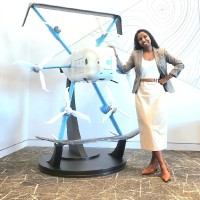
Maria Ruuiz
Member, Women's Automotive Network and Former Manufacturing EngineerFord Motor Company
Intelligent Asset Management - Track Chair: Billy Ingram, Director Lean Product and Process Development, Interface
10:55 am - 11:25 am Case Study: How Crusoe Is Using AI to Move from Inspection to Predictive Quality in Data Center Manufacturing Anitha Kapu - Director of Quality, CrusoeAs data center infrastructure manufacturing scales to meet unprecedented demand, quality leaders face increasing pressure to improve reliability while maintaining speed and efficiency. In this session, Anitha Kapu, Director of Quality at Crusoe, will explore how AI is helping manufacturers evolve from traditional inspection-based quality programs toward predictive, data-driven approaches that identify risks earlier, prevent defects before they occur, and drive continuous improvement across the value chain.
- Understand how to move beyond traditional inspection-based quality models toward predictive quality strategies that proactively prevent defects.
- Learn how to combine inspection, production, supplier, and field performance data to create a unified quality intelligence framework.
- Explore the role of AI, machine learning, and computer vision in defect prediction, automated inspection, and root-cause analysis.
- Discover how predictive quality dashboards and closed-loop feedback systems can accelerate decision-making and continuous improvement across manufacturing, engineering, and supplier networks.
- Identify where AI delivers measurable quality and business value, while maintaining a human-in-the-loop approach that empowers rather than replaces quality professionals.
Intelligent Asset Management - Track Chair: Billy Ingram, Director Lean Product and Process Development, Interface
11:25 am - 11:55 am Case Study: A Practical Path to AI in Manufacturing Operations Nick Haase - Co-Founder, MaintainXManufacturers are accelerating AI adoption, yet many initiatives stall because the operational foundation is not ready: work is not fully digitized, execution data is inconsistent, and machine signals are disconnected from frontline action. This session outlines a practical, real world path to AI that begins with standardized work and trustworthy data, then builds toward connected assets and automated decision flows.
• Establish a reliable operating dataset by digitizing and standardizing frontline work across assets, shifts, and sites
• Strengthen asset context and governance to ensure machine, maintenance, and execution data can be trusted for AI driven decisions
• Connect PLC, SCADA, and sensor data to frontline workflows to close the loop between equipment signals and real operational action
• Automate prioritization and response by activating AI to turn alerts into targeted work that improves uptime, throughput, and labor efficiency
• Accelerate progress with a clear sequencing model and early use cases that build credibility while avoiding multi quarter integration delays.
Digital Work Instructions - Track Chair: Jeff Clark Global Director of Operational Excellence & Quality NA, Destaco
10:25 am - 10:55 am Panel: Digital Work Instructions that Personalise Upskilling and Shape High‑Performance Behaviours Rajeev Sinha - Head of Artificial Intelligence, J.B. Poindexter & Co, Inc.Garith Duncan - Digital Transformation Senior Manager, SNF Holding Company
Ram Seetepalli - Director, AI & Digital Enablement, Motiva Enterprises
Manufacturers are shifting from paper and tribal knowledge to digital work instructions that capture expertise, personalize upskilling, and strengthen frontline performance. The real challenge is driving trust and daily use, equipping supervisors to lead the change, and ensuring experienced workers' knowledge is captured and embedded. As organizations scale across sites, they must measure adoption, overcome cultural and operational barriers, and enhance instructions with tools like augmented reality to reduce errors and accelerate training.
• How do you get frontline workers to trust and actually use digital instructions, especially when they're used to paper or tribal knowledge?
• What Change Management strategies did you put in place to ensure successful user adoption?
• How are you capturing the tribal knowledge and expertise of your most experienced workers and integrating that knowledge into Digital Work Instructions?
• What have you found to be the biggest barrier when scaling digital work instructions across multiple sites, and how did you overcome it?
• How do you measure adoption and ensure digital instructions are actually being used on the frontline?



Digital Work Instructions - Track Chair: Jeff Clark Global Director of Operational Excellence & Quality NA, Destaco
10:55 am - 11:25 am Case Study: Modernizing Work Instructions to Accelerate Training, Quality, and Uptime at Destaco Jeff Clark - Global Director of Operational Excellence & Quality NA, Destaco.Destaco is transforming its manufacturing operations by replacing paper based procedures and tribal knowledge with a modern, mobile first digital work instruction platform. This initiative enables frontline teams to access clear, visual, step by step guidance directly at the point of work, improving consistency, reducing downtime, and accelerating workforce readiness. Jeff Clark will share how Destaco deployed the solution across its operations, the change management approach behind the rollout, and the measurable impact on quality, training, and operational performance.
• Accelerated onboarding and upskilling by giving new operators instant access to intuitive, visual, step by step instructions, reducing reliance on shadowing and expert availability.
• Improved first time right performance through standardized, easy to follow digital procedures that reduce variation and eliminate outdated paper instructions.
• Reduced troubleshooting and repair time by enabling operators to quickly access contextual guidance and equipment specific procedures at the point of use.
• Captured and preserved critical tribal knowledge by converting expert demonstrations and legacy documents into structured, digital workflows accessible across all sites.
• Increased operational agility by enabling rapid updates to procedures, ensuring teams always work from the latest version without manual distribution or reprinting.
Digital Work Instructions - Track Chair: Jeff Clark Global Director of Operational Excellence & Quality NA, Destaco
11:25 am - 11:55 am Case Study: Boosting Workforce Autonomy with AI by Turning Knowledge into Clear, Immersive Point‑of‑Work Guidance Dave Landreth - Vice President, Customer Strategy, AugmentirManufacturers are facing unprecedented workforce disruption, skills gaps, and operational variability. Traditional digitization alone is no longer enough. This session explores how Augmentir's AI native Connected Worker Platform, powered by Industrial AI Agents, Generative AI, and integrated digital workflows, creates a unified "single pane of glass" for frontline operations. Attendees will learn how leading manufacturers are accelerating onboarding, improving quality and safety, and enabling every worker to perform at their best through adaptive, personalized, AI driven support.

AI - Track Chair: Jon Frost, Solutions Engineer, Poka
10:25 am - 10:55 am Panel: From Digitized Knowledge to the Augmented Worker, How Industrial AI is Reshaping the Frontline Rob Whaley - Operational Excellence Master, Enterprise Transformation Leader, General MotorsJohn Dyck - CEO, CESMII
Mike Brauckman - Head of Focused Improvement, Nestlé
- Understanding how industrial AI is transforming frontline operations, from knowledge management and troubleshooting to decision support and task execution
- Identifying the critical success factors for building trust in AI, including data quality, operational context, safety considerations, and workforce adoption
- Exploring how to embed AI into daily routines and frontline workflows to drive productivity, consistency, and continuous improvement
- Assessing the impact of AI-powered augmentation on workforce roles, skills development, and the future relationship between workers and technology



AI - Track Chair: Jon Frost, Solutions Engineer, Poka
10:55 am - 11:25 am Case Study: From High-Risk to Benchmark: Soprema's Connected Worker Journey Florent Bellini - Director of Operations, SOPREMA CanadaTwo years ago, Soprema was flagged as one of its industry's higher-risk operations on health and safety. In this session, a Soprema leader shares how the team rebuilt its audit process from the ground up and used a connected worker platform to pilot digital forklift inspections on the floor — turning a compliance headache into daily habit. The result: safety audits that once took days now take hours, incident trends the team can actually see coming, and a plant that's gone from watch-list to reference site for its peers. A candid, in-the-trenches look at what it actually took to change the culture, not just the paperwork.

AI - Track Chair: Jon Frost, Solutions Engineer, Poka
11:25 am - 11:55 am Case Study: How Manufacturers Are Reducing Training Time and Improving Operational Consistency Through Digital Work Execution Jon Frost - Solutions Engineer, Poka- Reduce onboarding and training time by making expert knowledge accessible to every worker, regardless of experience level.
- Improve quality, safety, and operational consistency by standardizing how critical tasks are performed across sites and shifts.
- Capture and preserve frontline expertise before it leaves the organization through turnover and retirements.
- Enable faster problem-solving by delivering contextual guidance and operational knowledge directly at the point of work.
- Create a foundation for continuous improvement by turning frontline insights into scalable operational best practices.

11:55 am - 1:00 pm
Networking Lunch
Connected Worker Technology in Action Tracks: A behind‑the‑scenes look at the connected technologies reshaping frontline work today
Track Chair: Travis Prior, Associate Director, S/4HANA Ops Lead - Mission Systems, Collins Aerospace
1:00 pm - 1:30 pm Case Study: Aligning People, Processes, and Decisions at Scale Through AI‑Driven Real‑Time Operations Abhi Gummakonda - Senior Manager IT Airport Services, United AirlinesUnited Airlines has built an integrated real time operations platform that unifies frontline workers command center teams and automated AI agents around a single operational picture. The in house system consolidates IoT signals, event data, computer vision and predictive analytics to help teams make faster and more accurate decisions. This session explores how United designed deployed and scaled this capability across airports to improve workforce alignment reduce delays strengthen customer communication and enable a new level of operational orchestration that manufacturing leaders can learn from.
• Deliver real time operational visibility through a single pane of glass by integrating IoT and operational systems for every persona from gate agents to command center leaders
• Use predictive intelligence to anticipate delays and trigger coordinated action across customer channels ramp teams crew scheduling and downstream operations
• Automate customer and workforce communication with GenAI to reduce manual effort improve message quality and ensure consistent updates across mobile apps displays and operational teams
• Enable cross functional collaboration with AI supported workflows that help frontline teams baggage catering cleaning gate agents and corporate operations coordinate in real time
• Scale adoption through a structured frontline first change management model that engages super users trains local champions rolls out by airport and maintains continuous feedback loops

Track Chair: Travis Prior, Associate Director, S/4HANA Ops Lead - Mission Systems, Collins Aerospace
1:30 pm - 2:00 pm Case Study: Putting the Connected in Connected Worker: Private 5G as the Foundation for Frontline Empowerment Brian Zmikly - Senior Director, US 5G Acceleration, VerizonConnected worker tools, like AR maintenance guides, wearable safety sensors, and real-time video. fail when legacy Wi-Fi drops coverage. Private 5G (P5G) delivers the reliable, low-latency foundation frontline teams need for uninterrupted access to critical data and guidance on the plant floor. We will also be discussing manufacturing use cases and real factory implementations.
Key Discussion Points:
- Low-Lag Reliability: Eliminate dropouts and dead zones for handhelds, wearables, AMR,and AR headsets.
- Real-Time Safety: Enable instant hazard alerts, computer-vision monitoring, and immediate emergency response.
- On-the-Job Upskilling: Use AR guides, digital twins, and remote experts to elevate worker capability at the point of work.
- Operator Augmentation: Shift workers from manual monitoring to real-time control of automated machinery.

Track Chair: Travis Prior, Associate Director, S/4HANA Ops Lead - Mission Systems, Collins Aerospace
2:00 pm - 2:30 pm Case Study: The Hershey Company: Scaling Connected Work to Strengthen Frontline Execution and Workforce Performance Logan McNear - Digital Manufacturing Program Lead, The Hershey CompanyAs The Hershey Company continues to advance its connected worker journey, the organization has successfully deployed digital tools and standardized frontline workflows to improve operational execution, support workforce development, and drive greater consistency across manufacturing sites. In this session, Logan will share lessons learned from scaling connected worker initiatives, the challenges encountered along the way, and the strategies that helped deliver sustainable operational improvements.
- Building a connected worker framework that enables consistent execution across manufacturing sites.
- Empowering frontline employees with digital workflows, work instructions, and real-time operational visibility.
- Accelerating workforce onboarding and skills development through improved knowledge transfer and standardized processes.
- Improving process adherence, operational discipline, and workforce engagement through connected technologies.
- Key lessons from scaling connected worker initiatives while balancing enterprise standards with local plant requirements.

Track Chair: Jeff Clark, Global Director of Operational Excellence & Quality NA, Destaco
1:00 pm - 1:30 pm Case Study: Transforming Site Performance with a Standardized Planning and Scheduling Tool Prasanthi Muddhana - Head of Digital and Process Enablement Unit, BayerBayer is modernizing its manufacturing network by shifting from tribal knowledge and inconsistent workflows to a standardized, system driven planning and scheduling model. After rolling out a new scheduling solution across two major sites, the team uncovered critical insights about change management, site engagement, and the importance of reliable, repeatable workflows. This session explores how a structured scheduling foundation enables better decision making, clearer visibility into true process costs, and a pathway to continuous improvement across the network.
• Build a consistent, reliable scheduling workflow that replaces undocumented assumptions and tribal knowledge with validated, data driven processes
• Engage plant teams early and continuously to ensure ownership, adoption, and readiness for new system driven ways of working
• Use standardized workflows to reveal true process costs, identify bottlenecks, and uncover improvement opportunities that were previously invisible
• Apply lessons learned from the first site rollout to accelerate success at subsequent sites and create a repeatable deployment model
• Position planning and scheduling as a foundation for broader digital transformation, including AI enabled optimization and future connected worker initiatives

Track Chair: Jeff Clark, Global Director of Operational Excellence & Quality NA, Destaco
1:30 pm - 2:00 pm Case Study: Transforming Maintenance Execution with Predictive AI Diagnostics Mark Fosdike - CEO and Co-Founder, DatchMaintenance teams are under increasing pressure as experienced technicians retire and newer workers step into more complex roles with less hands on knowledge. Predictive AI diagnostics are reshaping maintenance execution by capturing tribal knowledge, analyzing historical data, and giving frontline teams real time guidance to troubleshoot issues with greater speed and accuracy. This session explores how AI driven insights support faster root cause analysis, improve first time right performance, and help organizations build a more capable, resilient maintenance workforce.
• Addressing the challenge of a retiring workforce: how to leverage tribal knowledge and historical data to upskill new workers
• Empowering frontline workers with AI Diagnostics to achieve faster troubleshooting
• Leveraging agentic AI for root cause analysis and improving first-time-right fixes

Track Chair: Jeff Clark, Global Director of Operational Excellence & Quality NA, Destaco
2:00 pm - 2:30 pm Case Study: Using AI Vibe Coding to Deliver Quick Manufacturing Solutions Samik Mody - Director of Information Technology, Manufacturing & Maintenance Systems, E & J Gallo WineryBhupinder Gill - Sr. Technical Product Manager, E&J Gallo Winery
AI assisted coding is reshaping how fast manufacturers can design, deploy, and scale digital solutions. In this session, Samik and Bhupinder will share how their team is using AI driven development to bypass long vendor timelines, build tools tailored precisely to existing processes, and deliver value in days, not months. Through real case studies in asset management and track and trace, they will outline what it takes to make internal development scalable, secure, and sustainable while empowering a broader workforce to build and innovate.
• Delivering manufacturing solutions 3–5x faster with AI assisted development
• Asset optimization and end to end track & trace
• Expanding the builder community while maintaining governance & scalability
• Driving workforce adoption through hyper tailored, user led design
• Data readiness, single pane of glass & device strategy

Samik Mody
Director of Information Technology, Manufacturing & Maintenance SystemsE & J Gallo Winery

Many industrial organizations are laying the groundwork for AI-powered maintenance by transforming the underlying processes, systems, and data that support day-to-day operations. With a focus on data quality, system integration, and process consistency, these initiatives are enabling scalable AI use cases across the full maintenance lifecycle, from identifying work through planning, scheduling, execution, and closeout. As many organizations have discovered, success with AI depends less on the technology itself and more on the quality of the operational and data foundations that support it.
This session explores how manufacturers are building the digital infrastructure needed to ensure AI delivers measurable operational value, while evaluating emerging use cases that support predictive maintenance, intelligent scheduling, and frontline decision-making.
- Unifying maintenance processes across sites and business units to create a consistent data layer that supports AI integration and long-term operational visibility
- How AI agents can support complex planning and scheduling decisions by factoring in asset criticality, workforce availability, geospatial constraints, and material readiness
- Preparing for future use cases, including predictive modelling for asset health, computer vision for anomaly detection, and intelligent assistants that support troubleshooting and parts management
- Generating a rich dataset across the full maintenance lifecycle to enable continuous improvement and reshape how operational excellence is measured and achieved
This session will provide practical insights into the foundational capabilities required to move AI initiatives from pilot programs to sustainable business outcomes.

Manufacturers need to respond faster to changing production demands, workforce shortages, and increasing operational complexity. This session explores how AI-powered skills visibility helps organizations match the right people to the right tasks in real time, improving agility, productivity, and workforce effectiveness across the shop floor.
- Defining and managing skills requirements across roles, tasks, and operations
- Integrating skills visibility with HR, learning, and operational systems to create a connected workforce ecosystemBalancing global standardization with local operational requirements and exceptions
- Using AI to improve skills visibility, identify gaps, and support future workforce planning
- Reducing dependency on tribal knowledge while accelerating onboarding and cross-training
- Building a connected workforce strategy that supports both operational performance and employee development

Kimberly Clark is modernizing MES across 75 plants through a global standardization program designed to unify processes, strengthen data foundations, and improve frontline adoption. In this case study, Suraj Sriram shares how his team accelerated deployment in North America, balanced standardization with site level needs, and built the cross functional engagement required to scale digital manufacturing systems effectively.
• Standardizing MES at scale through an 80/20 global template and a process family rollout model
• Sustaining performance with a dedicated MES specialist network, providing on site training, troubleshooting
• Digitizing frontline routines with mobile checklists and digital data capture to improve accuracy, compliance, and operator ownership
• Laying the groundwork for AI enabled operations by piloting operator support use cases that reduce dependency on stretched support teams and improve decision making

Track Chair: Kailin Baecht, User Experience Lead, Merck
1:00 pm - 1:30 pm Vibe Coding for Manufacturing: Building the Tools You Need Without a Development Team Oscar Castillo - Factory Modernization & Digital Transformation Project Manager, Northrop Grumman
Oscar Castillo
Factory Modernization & Digital Transformation Project ManagerNorthrop Grumman
Track Chair: Kailin Baecht, User Experience Lead, Merck
1:30 pm - 2:00 pm Case Study:From Connected Worker to the Orchestrator of Intelligent Operations: How AI is Transforming the Manufacturing Workforce Andy Hancock - Global Vice President of the Domain Advisory, SAP Supply Chain Management, SAPThe connected worker is evolving from a user of digital tools to an orchestrator of intelligent operations. As AI, real time data, enterprise systems, and frontline workflows converge, organizations have an unprecedented opportunity to enhance safety, productivity, quality, and workforce effectiveness.
This session explores how AI enabled connected workers are transforming operations by delivering contextual insights, predictive recommendations, and digital assistance at the point of performance. Learn how leading organizations are addressing workforce shortages, accelerating skills development, capturing institutional knowledge, and empowering employees to make faster, safer, and better decisions in increasingly complex environments.

Track Chair: Kailin Baecht, User Experience Lead, Merck
2:00 pm - 2:30 pm Case Study: Designing a Single Frontline Interface That Simplifies Work and Strengthens Compliance Pareshkumar Hotchandani - Global Staff Engineer/Site Lead Operational Technology, Smith+NephewFrontline workers often struggle with fragmented systems, multiple logins and inconsistent workflows that slow execution and increase the risk of error. By consolidating production, quality and traceability tasks into a single, intuitive interface, manufacturers can simplify the operator experience and dramatically improve data accuracy, compliance and productivity. In this session, Pareshkumar Hotchandani shares how his organization is creating a unified frontline environment where workers complete all required actions through one screen. He will outline the integration strategy, data architecture and change management approach behind this transformation, and how it is enabling faster adoption and more reliable operations across global sites.
· Creating a one screen operator experience that eliminates system hopping and reduces cognitive load
· Integrating production, quality and enterprise systems behind the scenes
· Empowering frontline teams to help design and maintain digital workflows
· Improving data accuracy and speed by replacing manual paperwork with automated digital capture
· Scaling a unified interface across global sites with different processes, regulations and levels of maturity

2:30 pm - 3:15 pm
Solution Exchange and Afternoon Networking Break
Step into the Solutions Hall for a fast-paced and interactive session designed to help you discover the technologies and experts solving today's biggest operations challenges. Choose five participating solution providers and spend five focused minutes at each where you'll experience live demos, real-world use cases, and practical strategies you can apply in your own organization. Collect a stamp at each stop to complete your Solution Card for a chance to win incredible prizes, while making meaningful connections with the companies driving innovation across the industry
3:15 pm - 3:50 pm
Keynote Panel: Fixing the Foundations That Turn Islands of Insight into Enterprise Scale ROI
Sugato Bose -
Senior Director & Chief Enterprise Architect,
Medline Industries
Mike Brauckman - Head of Focused Improvement, Nestlé
Bharathi Rajan - Vice President - Data, Digital and AI, Swire Coca-Cola, USA
Billy Ingram - Director Lean Product and Process Development, Interface
Pilots often deliver impressive results, yet organizations struggle to replicate that success across multiple plants, value streams and regions. This panel explores the real reasons scaling stalls, from fragmented data and inconsistent standards to capability gaps and leadership misalignment. The conversation will highlight how process mapping, cross functional workshops, data integrity frameworks and clear operating models create the foundation for enterprise wide transformation. Participants will share practical lessons on moving from theory to execution, building internal capability and creating the pull needed for sustainable digital adoption.



3:50 pm - 4:35 pm
Lightning Talks
Matthew Mott -
Director of Marketing,
Zello
Brian Perlstein - Digital Manufacturing Innovation Leader, Owens Corning
Gavin Riepe - National Account Manager, Luxor Workspaces
Jon Lane - VP, Solutions, Redzone
Alex Norell - Head of Edge Platforms, Roboflow
Talk 1: The Factory Floor Has No Keyboard: Why voice is the only interface that works when hands and eyes are already busy





4:35 pm - 5:05 pm
Continuous Improvement That’s Finally Continuous
Devin Bhushan -
Founder & CEO,
Squint
Ayeda Figaro - Global Director, Capabilities Learning Operations, Procurement & Gbs, The Kraft Heinz Company
Every industrial organization has tried to make CI continuous. But they all hit the same wall: not enough experts, not enough hours, not enough coverage. Squint's Industrial AI changes the math (no stopwatch required). Upload video from any line and let a Lean Manufacturing Agent generate time and motion studies, Yamazumi charts, recommendations for improvement, and optimized work instructions. See how AI-powered agents can scale Lean Six Sigma in your organization, so your CI teams can balance entire plants, and coordinate work across every operator.

Ayeda Figaro
Global Director, Capabilities Learning Operations, Procurement & GbsThe Kraft Heinz Company
5:05 pm - 5:35 pm
Closing Keynote: The Human Side of Connected Worker Transformation
Barrett Hopper -
Director of Operations for Americas,
Mks Instruments

5:35 pm - 5:40 pm
Co-Chair’s Closing Remarks
Travis Prior -
Associate Director, SAP ERP Project Mgt, Interiors,
Collins Aerospace
Jeff Clark - Global Director of Operational Excellence & Quality NA, Destaco.
5:40 pm - 6:40 pm
‘Back to the 80’s Networking Reception
After a full day of insights, it's time to rewind and unwind. With retro vibes and classic hits, this is your chance to connect with your peers and further conversations in a relaxed atmosphere. Join us for a night of bold flavors, classic entertainment, and timeless 80s style.